Proximity Sensors
Proximity sensors are non-contact sensors use for detecting the presence of nearby objects. They do not need to establish physical contact in doing so (which explains the non-contact part). Information collected by the sensors are then transformed into electrical signals.
Proximity sensors are highly functional and equipped with several features. Aside from contactless sensing, these sensors detect physical changes. Proximity sensors also boast of a high-speed response rate, especially when compared to switches requiring contact for sensing. They utilize semiconductor outputs so there is no need for moving parts, which are dependent on operating cycle. This makes proximity sensors’ service life longer compared to other types of sensors.
Read More
Another strong feature of proximity sensor is their flexibility. These devices are suitable for various applications, like when determining temperature conditions. They are also used for iOS and Android devices, specifically smartphones. Proximity sensors are at work when a user answers a phone call and the display automatically turns off. This feature also deactivates the buttons on your smartphone.
Proximity sensors are also used in self-driving cars & autonomous vehicles, production, factory, & assembly lines, AI & machine learning (collision detection on robots), anti-aircraft systems, and recycling plants. Other consumer electronic products use proximity sensors for capacitive touch switch functions.
Types
There are several types of proximity sensors and each one has a distinctive way of sensing targets. The most popular types are the capacitive proximity sensor and the inductive proximity sensor.
- Capacitive proximity sensors can detect anything that has electrical charge. They are used for detecting levels of liquids. Their potential targets are metal, wood, water, plastic, and glass.
- Inductive proximity sensors can only detect metallic targets. They use an electromagnetic field that alerts the sensors of a nearby target.
The other types of proximity sensors are the optical, ultrasonic, and magnetic proximity sensors.
Parts from Proximity Sensors Category
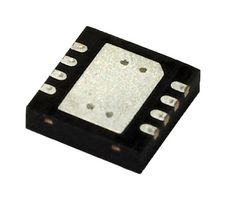
Proximity Sensor, Module, 8, -40 C, 85 C, 2.2 V, 5.25 V RoHS Compliant: Yes

PROXIMITY SENSOR, 300MM, -40 TO 85DEG C ROHS COMPLIANT: YES
PROXIMITY SENSOR, 200MM, -40 TO 85DEG C ROHS COMPLIANT: YES

PROXIMITY SENSOR, OPEN DRAIN, LGA-12; IC Output Type:I2C; Sensing Distance:4000mm; Sensor Case Style:OLGA; No. of Pins:12Pins; Supply Voltage Min:2.6V; Supply Voltage Max:3.5V; Operating Temperature Min:-20°C RoHS Compliant: Yes

Proximity Sensor, Low Power Consumption, Analogue, Digital, 200 mm, QFN, 8, 2.4 V, 3.6 V RoHS Compliant: Yes

Proximity Sensor, Adjustable, SOT-23, 6, -40 C, 85 C, 2 V, 5.5 V RoHS Compliant: Yes
SENSOR IC, INDUCTIVE PROXIMITY, SOIC-16; IC Output Type:Analogue; Sensing Distance:-; Sensor Case Style:SOIC; No. of Pins:16Pins; Supply Voltage Min:3.1V; Supply Voltage Max:40V; Operating Temperature Min:-40°C; Operating TemperatureRoHS Compliant: Yes
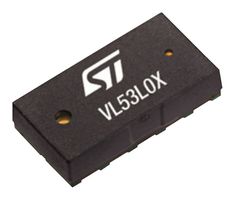
GESTURE DETECTION SENSOR, DIGITAL, LGA12; IC Output Type:Digital; Sensing Distance:2000mm; Sensor Case Style:LGA; No. of Pins:12Pins; Supply Voltage Min:2.6V; Supply Voltage Max:3.5V; Operating Temperature Min:-20°C; Product Range:- RoHS Compliant: Yes