Advanced Input and Output Capabilities for The Arduino Modulino Ecosystem
When teaching electrical engineering, providing cadets with early access to hands-on experiments has been shown to increase motivation and ease of learning. Reducing the amount of wiring required before something moves is an obvious step.
With the Modulino family, Arduino provides a series of hardware modules based on the Qwiiic bus, documented by Seeed Studio (see https://www.sparkfun.com/qwiic). It is a very advanced application of
the I2C bus, yielding the student-friendly advantages shown in the figure below.
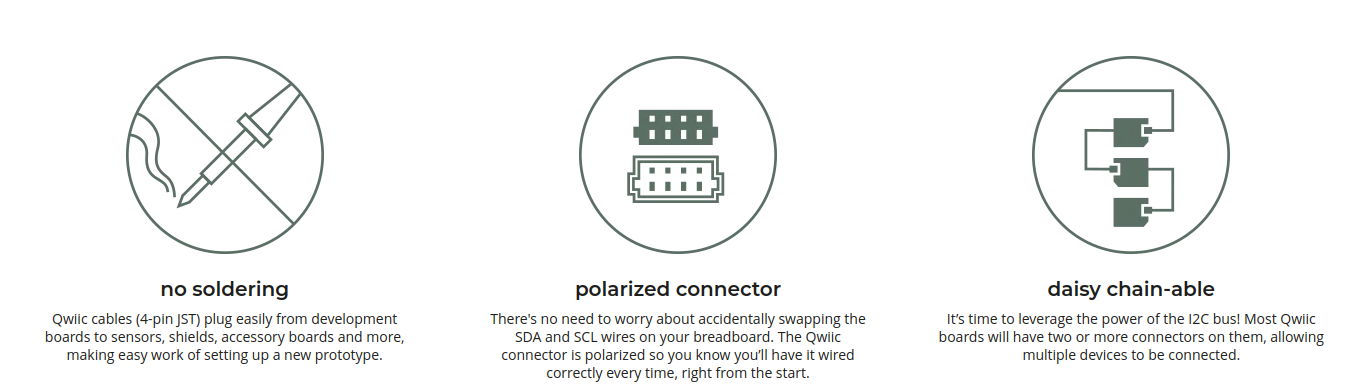
Modulino Cables Are Comfortable to Use
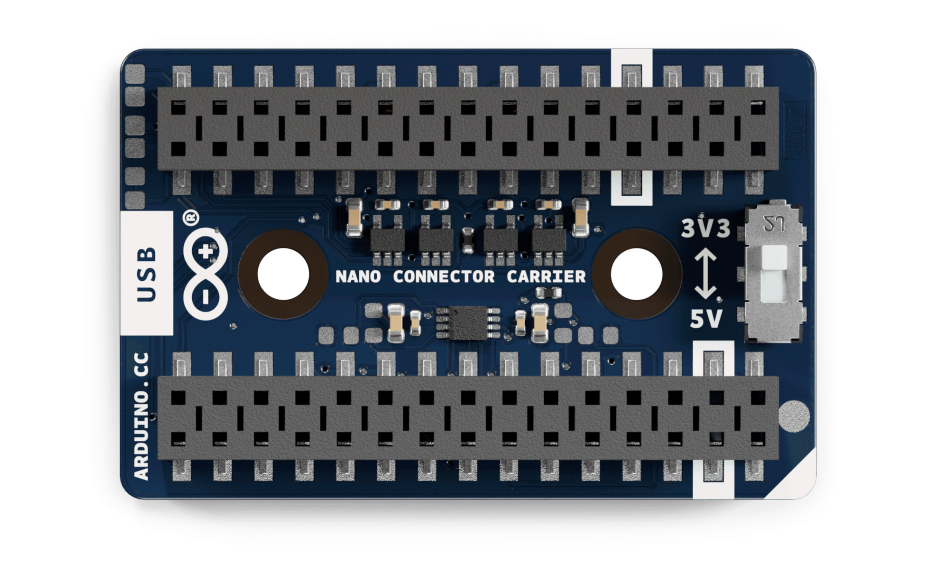
Thanks to the availability of reverse-proof cables, connecting Modulino units to the base Arduino is not difficult. In the case of models such as the Arduino Uno R4 (more commonly known under its SKU ABX00087), an on-board connector directly ensures connection to the Modulino. For Arduino Nano boards, use the Arduino Nano Connector carrier (SKU ASX00061) instead. As shown in the figure below, the Arduino Nano board is placed on top, with pins at the bottom connecting to the individual modules.
As for software, the Modulino ecosystem is supported by both C and MicroPython. For a classic C-based Arduino sketch, the Arduino library at https://github.com/arduino-libraries/Arduino_Modulino provides the code for interfacing. MicroPython developers, instead, use the package hosted on GitHub at the URL https://github.com/arduino/arduino-modulino-mpy.
Modulino Joystick and Modulino Vibro - Haptic Input and Feedback for Circuitry
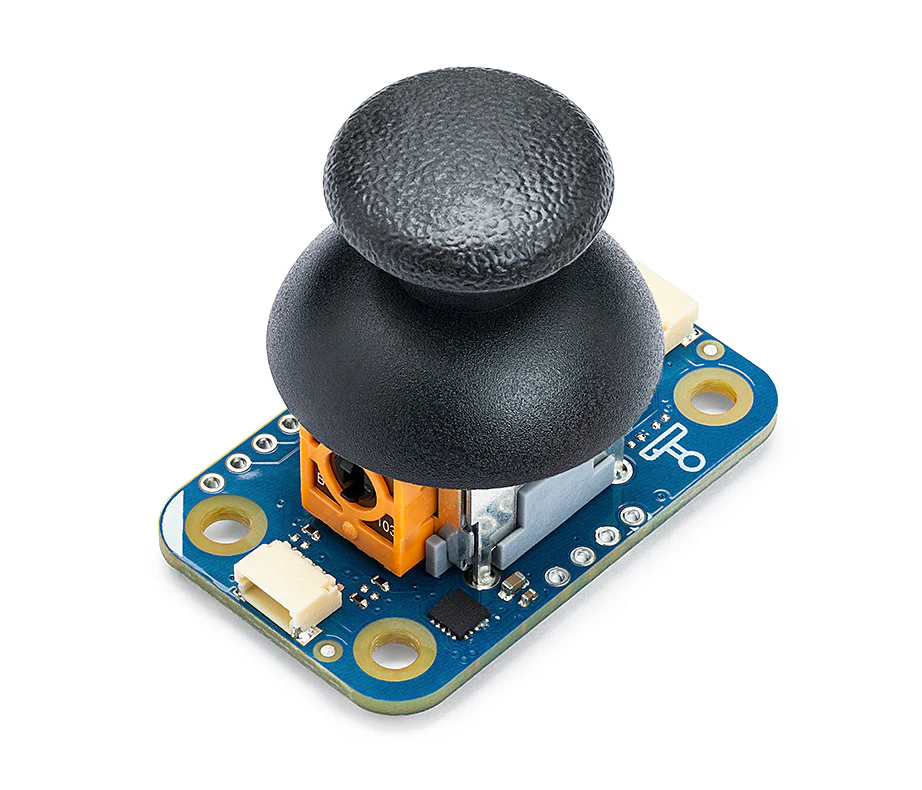
Permitting cadets to design small, classic video games is an absolute classic: the magic of moving a point across the screen with your own code is one of the most fundamental experiences in engineering education. With the Modulino Joystick (SKU ABX00135), Arduino provides a four-axis joystick as shown in the figure below.
Upon a successful connection between the dot and the target, the Modulino Vibro (SKU ABX00130) can produce a mobile phone-like vibration. Thanks to its light weight and four mounting holes, the board can be placed away from the main process computer, thereby ensuring that vibration does not affect the rest of the system.
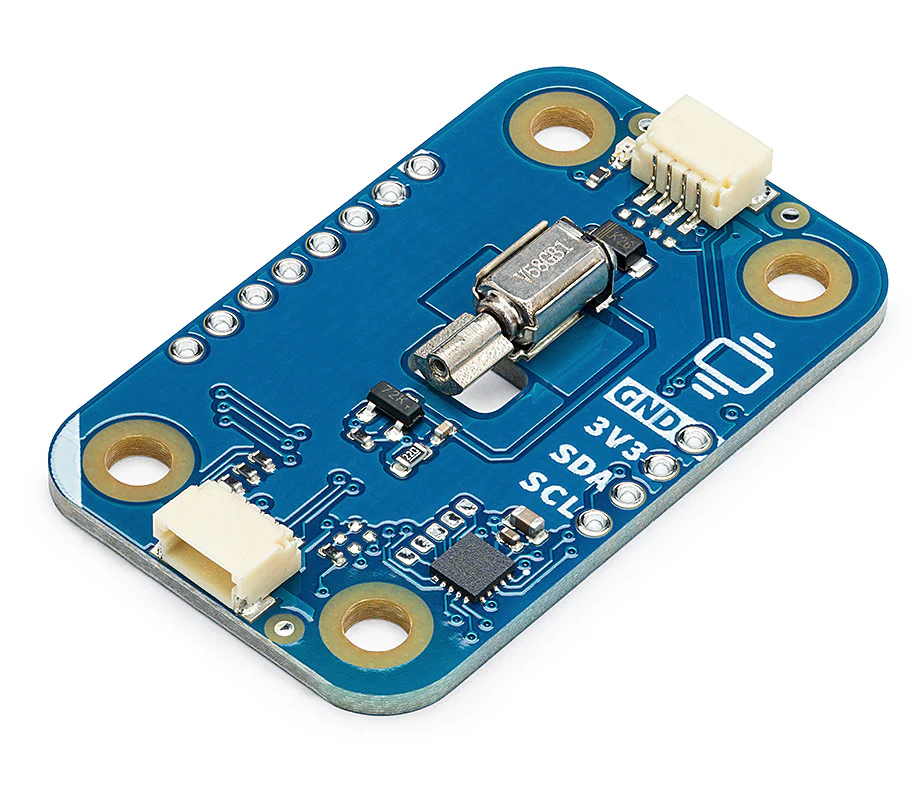
Careful observation reveals an extra chip. It is an STMicroelectronics STM32C011-derived microcontroller responsible for handling the interaction between the peripheral and the host.
Color Sensing With Modulino Light
Another enjoyable task involves all kinds of lighting control: For effective implementation of demonstration examples, the ability to sense surrounding light levels is helpful. Arduino addresses this with the Modulino Light (SKU ABX00111) - a module which provides a LTR-381RGB-01 brightness sensor developed by Lite-On.
Consulting its data sheet shows that the component can perform all kinds of brightness measurements and can even break down individual color components. The data sheet provides an internal overview, as shown in the figure below.
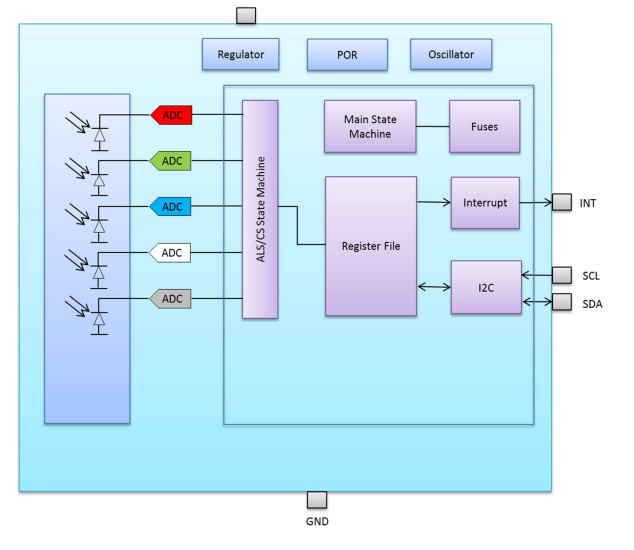
Thanks to the direct digital readout, developers on the Arduino side receive easy-to-process digital values. This means that no mathematical conversion is needed, which furthermore simplifies the bringing-up.
Switch Large Loads With the Arduino Modulino Latch Relay
The fourth expansion of the Modulino ecosystem is the Modulino Latch Relay module, as shown in the figure below.
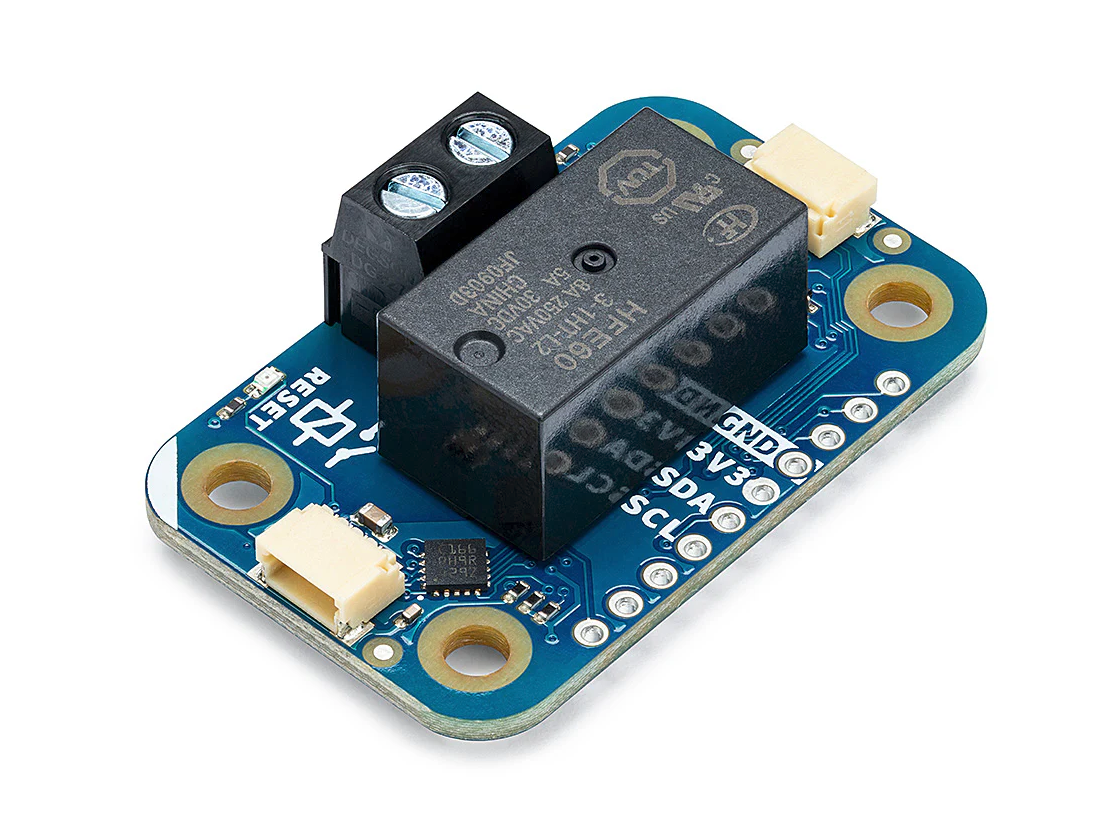
Thanks to the use of a latching relay, the ABX00138 is capable of storing state electromechanically - this means that the relay states get stored even if the microcontroller is powered off.
From a current perspective, Arduino emphasizes that the unit should be used only in low-voltage DC applications due to the exposed nature of its contacts. As for relay capabilities, the maximum DC voltage is 30 V.
Conclusion
The Modulino ecosystem provides STEM teachers and electronics instructors with a wholly new and fascinating environment for creating a wide range of teaching experiments. Thanks to the product\'s non-wiring nature, errors are minimized, and cadet satisfaction is optimized.